
Odissi carries over 2,000 years of history, rooted in the temples of Odisha in Eastern India. Though it nearly vanished, its revival over the last fifty years has restored its place as the most ancient of India's classical dance traditions, backed by archival evidence spanning centuries.
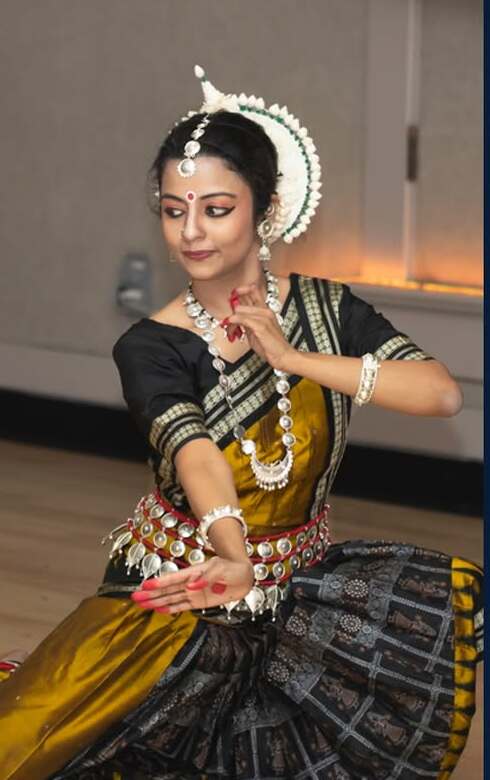
Dr. Sudhesna Mohapatra is a Vancouver-based Odissi artist whose work is rooted in the Padma Vibhusan Guru Kelucharan Mohapatra style. With over a decade of performance experience, she began her formal training under Guru Ajay Mohanty (Odissi Research Center in Bhubaneswar) at the age of 5 years. She went on to complete her Nritya Visharad certification from Pracheen Kala Kendra, further deepening her expertise, along with Sangeet Bhusan in Odissi and Hindustani vocals. Her multidisciplinary background in both dance and music continues to inform her nuanced approach to rhythm, melody, and expression.
The north Indian classical tradition built on raga (melodic framework) and tala (rhythmic cycle). A khayal performance typically opens slowly, exploring a raga's character, then builds into rhythmic compositions called bandish.
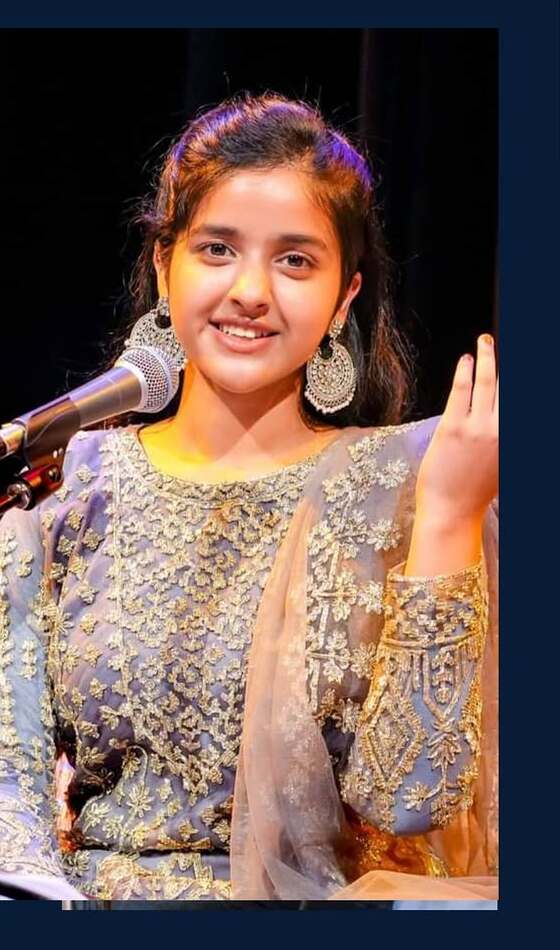
Saanjh is a 19-year-old vocalist trained in Indian classical music, currently studying at UBC. She has been learning music since the age of 7 and is currently training under Ustad Waseem Ahmed Khan from Kolkata, who belongs to the Agra Gharana. Saanjh has performed at various venues and events in Vancouver and continues to grow as a dedicated and passionate singer.
Read co-artist bios
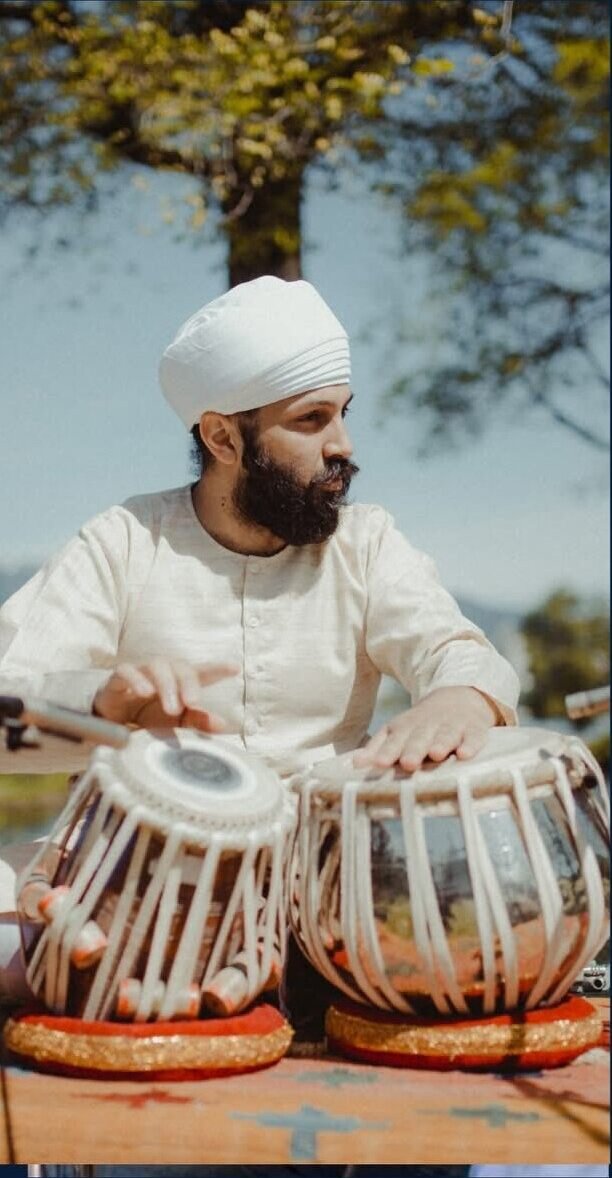
Sunny Matharu is a tabla soloist and accompanist whose playing is rooted in the Punjab Gharana through training under Ustad Satwant Singh and, continuing today, under Pandit Yogesh Samsi. With over two decades of performance experience, he has shared the stage with world-renowned artists across Indian classical, Kathak, jazz, and world music traditions. He also teaches privately in Surrey, BC.
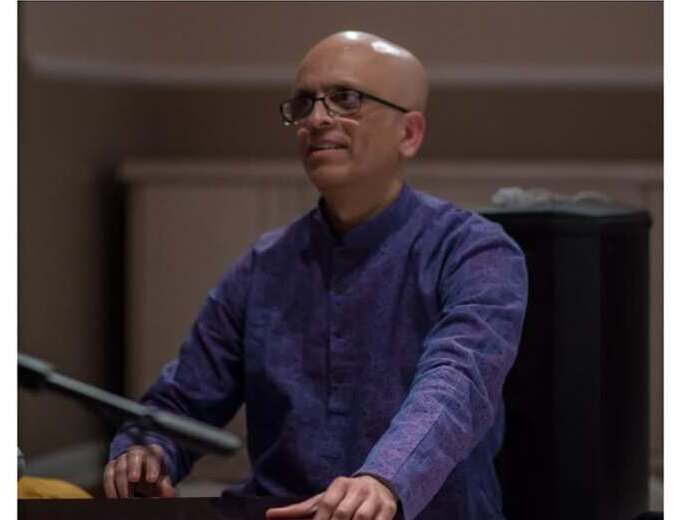
Mohan Bhide brings deep roots and lifelong dedication to the Indian Classical tradition. Beginning his musical journey in childhood with local teachers, he pursued advanced training under two highly respected harmonium masters: Pt. Balasaheb Mate and Pt. Govindrao Patwardhan. The harmonium has become his serious lifelong passion, leading to performance opportunities across India, UK, US and Canada, where he continues to share the stage and provide accompaniment for well-known artists around the world. Committed to preserving and promoting this art form, Mohan now guides a select number of students while maintaining an active practice of performance and instruction.
A south Indian tradition of singing devotional poetry, particularly the compositions of the Haridāsa saints in Kannada. Distinct from a Carnatic kacheri, Gāmaka emphasizes the meaning and emotional arc of the text, with melodic ornamentation drawn from the same raga vocabulary.
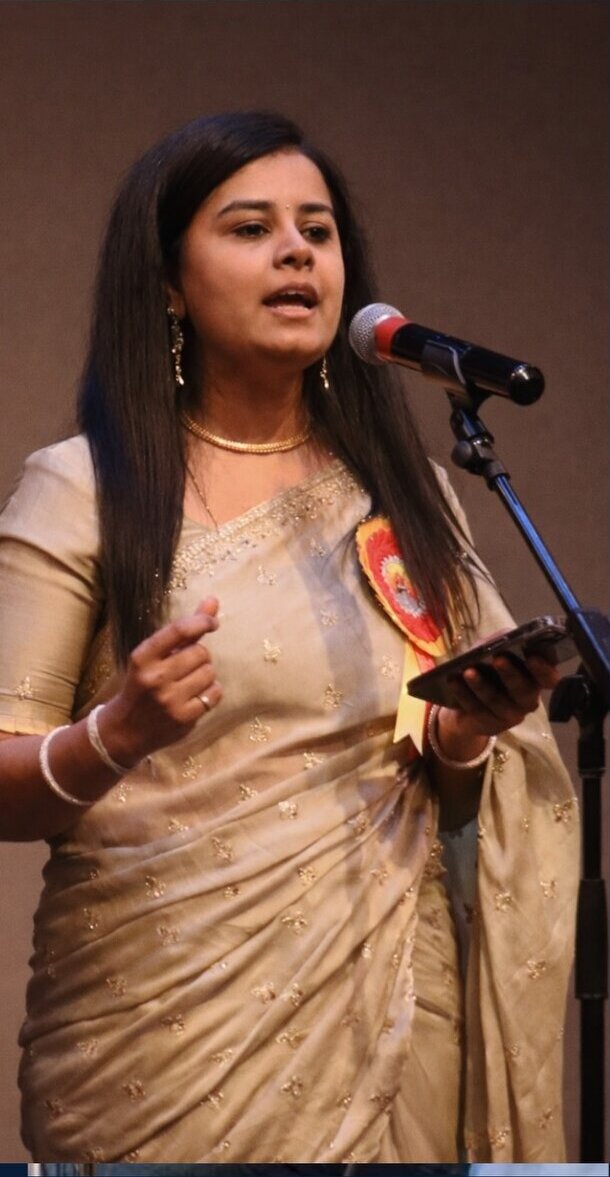
Harshini Nadig Seetharam is currently a PhD student at SFU studying the physiology of heart diseases. She is a Carnatic vocalist and performing artist specializing in Dāsasāhitya and the revival of rare and forgotten compositions of the Haridāsas. Trained in Bengaluru and Canada (Smt. Ambuja Holla, Vid. Kumuda Srinivasan, Dr. Vidyasagar Vankayala and Vid. Kavana Rajkumar), she has completed formal Carnatic music examinations in Bengaluru. She continues advanced artistic training under Dr. Sanathkumar Somayaji, focusing on Gāmaka, a deeply expressive musical rendering of poetry.
Read co-artist bio
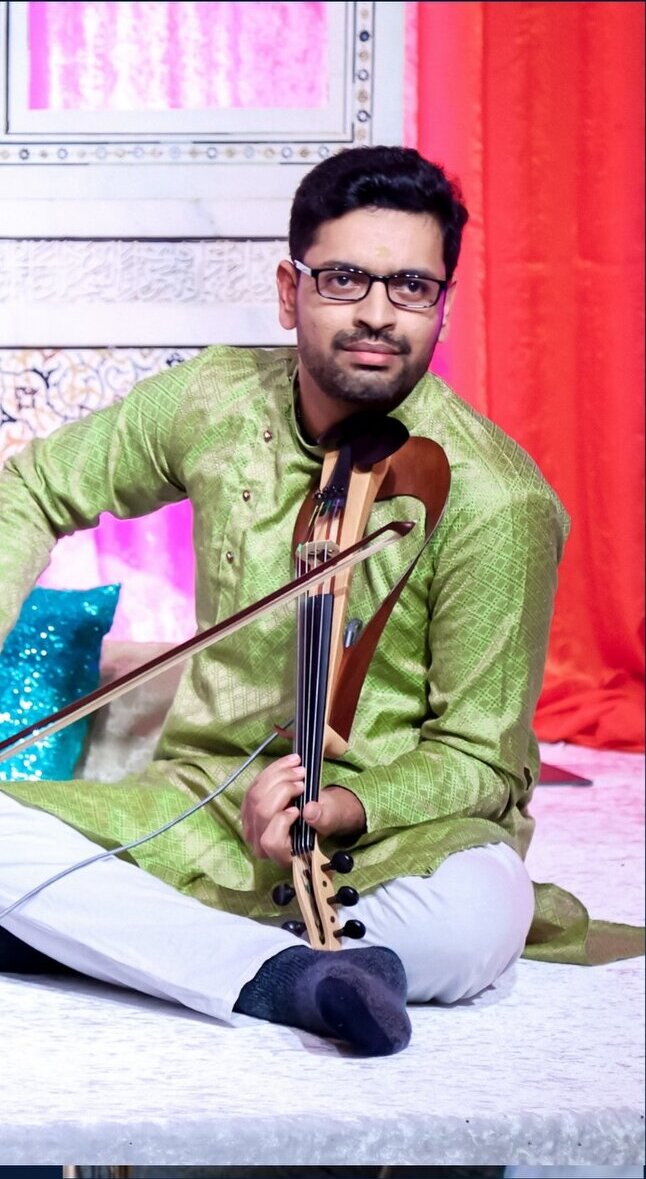
Shriram is a versatile and accomplished Carnatic violinist. His musical journey has been shaped under the guidance of some of India's most esteemed mentors. Trained under Guru Nellai Ravindran for over twenty years, Shriram's foundation is firmly grounded in the rich traditions of Carnatic music, built on a pursuit of excellence. He further refined his craft through advanced training under the legendary Padma Bhushan M.S. Gopalakrishnan and Kalaimamani Dr. Narmadha. It was under their guidance that Shriram embraced the renowned Parur Bāṇi style, known for its rigor, clarity, and precise melodic expression.
The singing of Sikh scripture in the classical ragas specified by the Gurus themselves. Traditionally accompanied by taarshehnai (a bowed string instrument), jori (a paired drum predating the tabla), and supporting vocals.
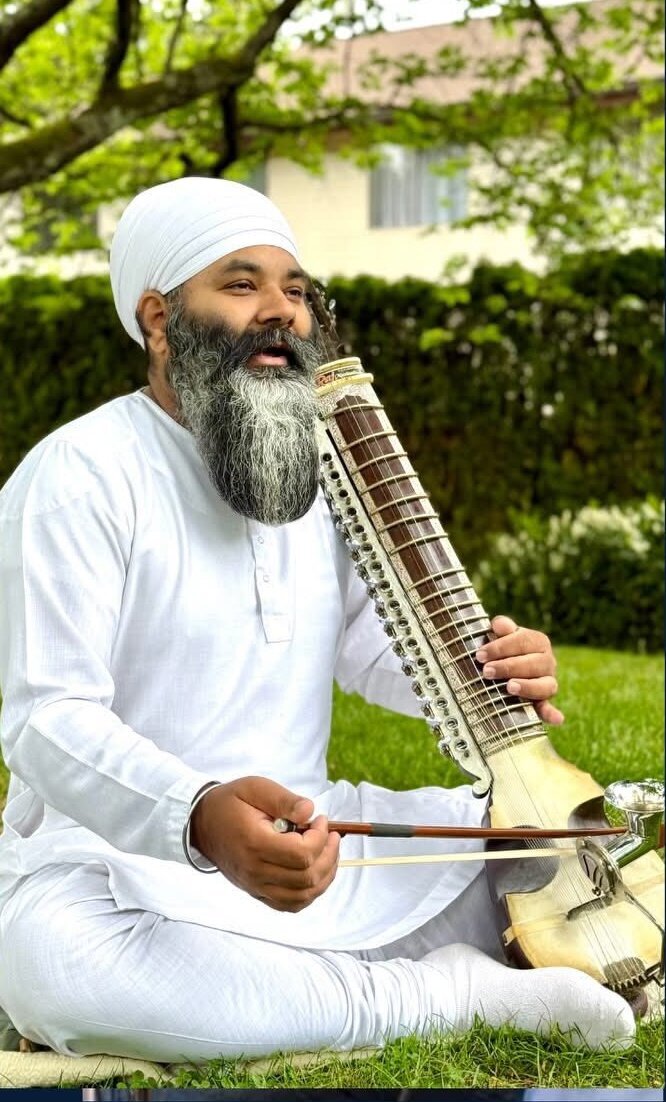
With the blessing of Sri Sat Guru Jagjit Singh Ji, Pavittar started learning music at a very early age from Sri Khairaiti Lal in his home town of Hoshiarpur. He began learning dilruba at age 15 from Sri Davinder Singh ji, Namdhari, Bhaini Sahib, later studying under Ustad Sri Varinder Kumar ji (sitar vaadak), disciple of Ustad Vilayat Hussain Khan sahib. He also learned from Sri Shaminderpal Singh, disciple of Ustad Sabri Khan sahib of the Senia gharana. He is also a student of the late Ustad Mohan Singh ji Namdhari, disciple of Pt. Rajan & Sajan Mishra ji, from whom he learnt vocal and gurmat kīrtan.
Read co-artist bios
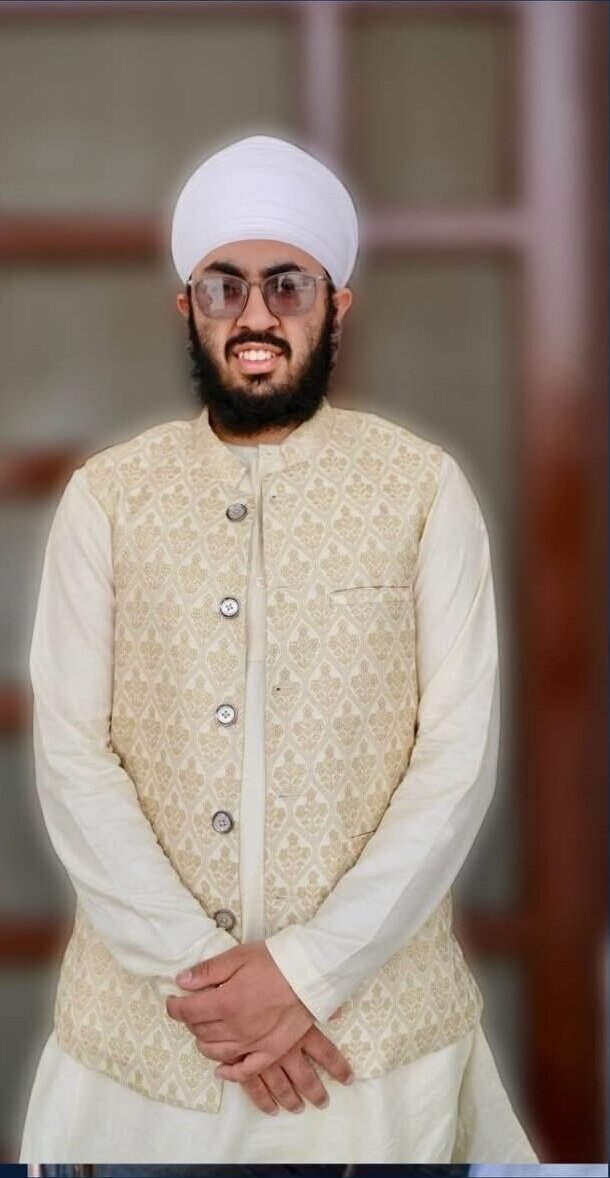
Didar Namdhari is a dedicated percussionist playing both tabla and jori. He has been learning tabla for the past six years under the guidance of Ustad Sunny Mathuru ji, developing a strong foundation in rhythm and classical technique. For the last two years he has also been learning the traditional art of jori from Ustad Sukhdev Singh ji Namdhari, further deepening his connection to the rich heritage of Sikh and Indian classical music. Through his training, Didar continues to refine his skills and share his passion for rhythm in both classical and devotional settings.
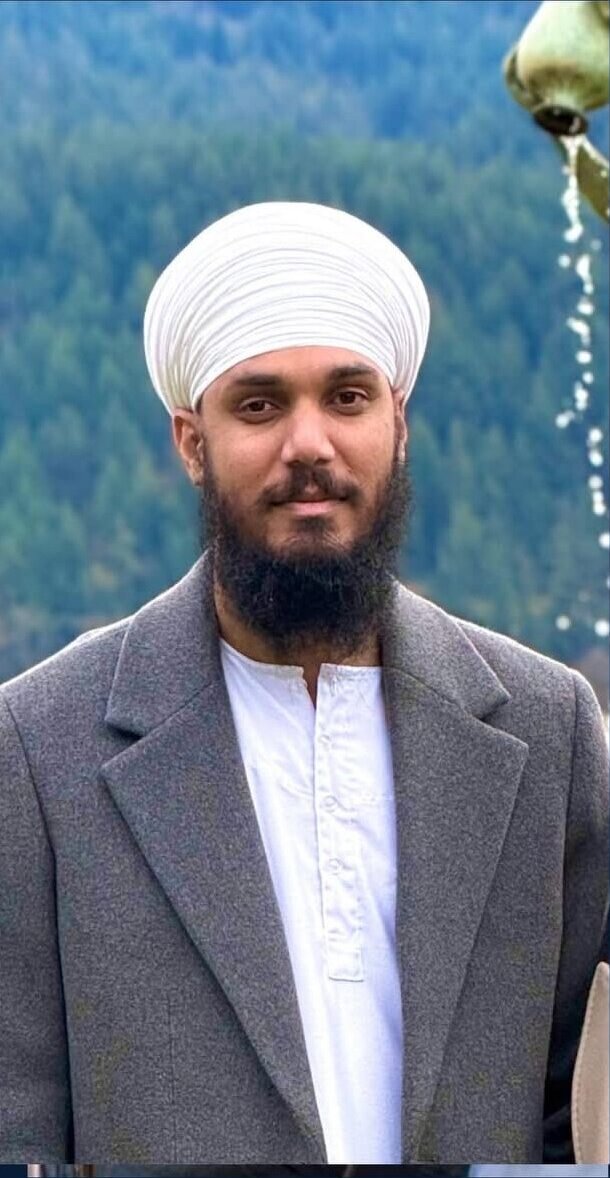
Gurcharan Singh is a vocalist specialized in classical raag-based Gurbāṇī Shabad Kīrtan. With over a decade of experience, he is trained in the Namdhari tradition under Ragi Balwant Singh Ji at Sri Bhaini Sahib, Punjab. His practice is rooted in authentic Gurbāṇī rendition through classical raags. In addition to vocal performance, he accompanies himself on the dilruba, a traditional tantī sāj, bringing depth and precision to his presentations.